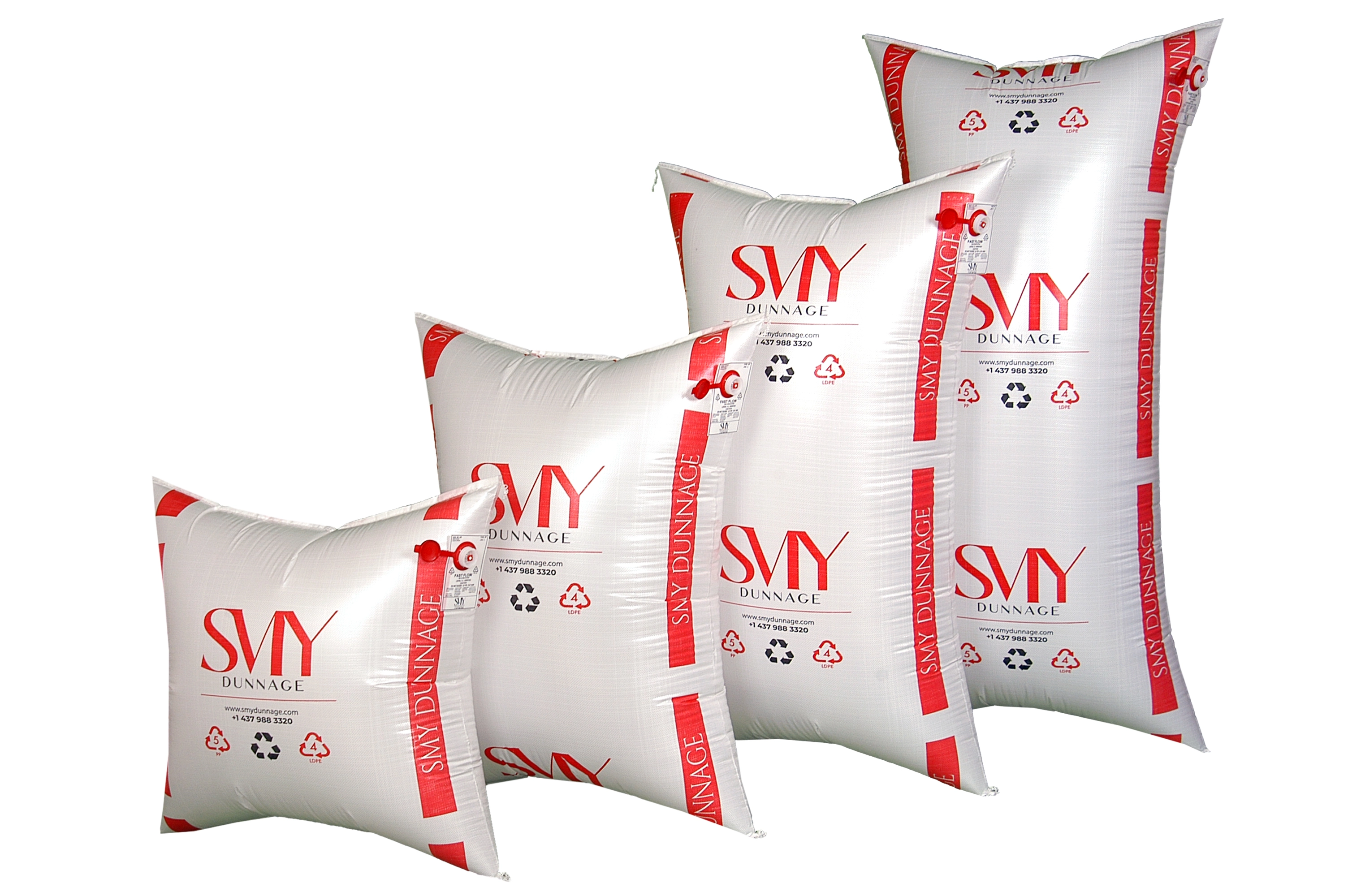
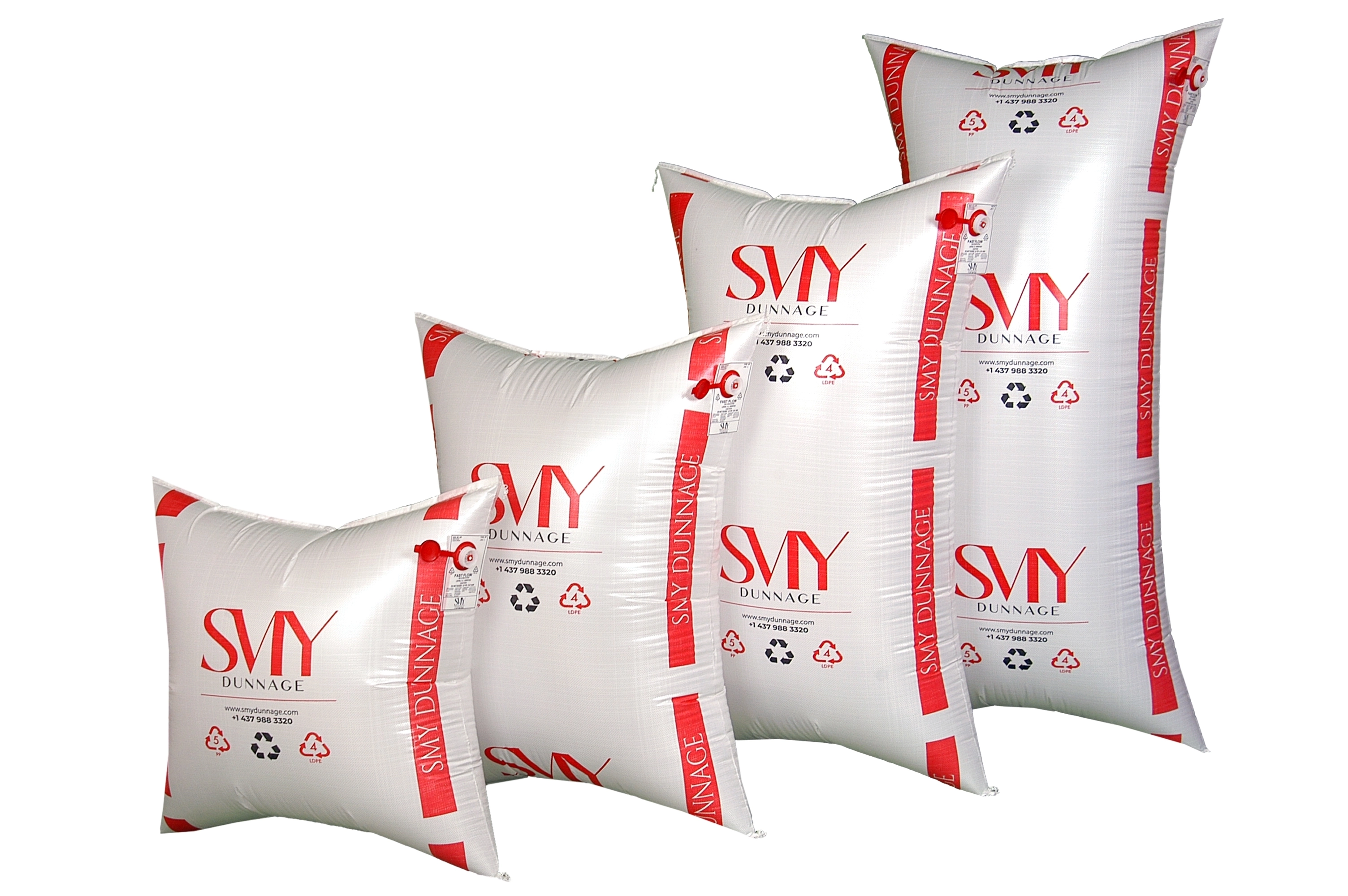
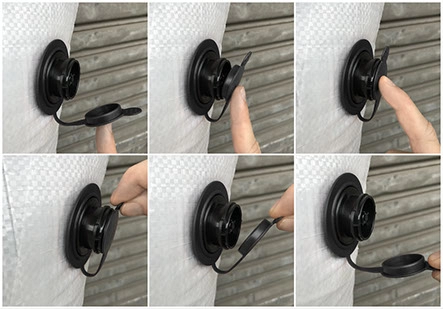
Choosing the appropriate dunnage airbag is crucial to ensuring safe and efficient transport for your cargo. Here’s a step-by-step guide to help you select the best airbag for your needs:
1. Assess Your Cargo Weight and Type
- Weight: Consider the total weight of your cargo. Heavier cargo requires airbags with higher durability and pressure ratings.
- Type: Evaluate the nature of your cargo. Different materials (e.g., fragile, metal, lightweight) may require specific airbag levels to accommodate their transport needs securely.
2. Determine the Transport Mode
- Truck and Trailer: For overland shipments, airbags with lower to medium PSI ratings (such as Level 1 or 2) are generally sufficient for lightweight and medium-weight cargo.
- Rail and Sea Freight: Transporting cargo by train or ship often requires more robust airbags (Levels 3–5), as these environments can create higher stress and potential movement for the cargo.
3. Analyze Gap Sizes
- Horizontal and Vertical Gaps: Measure the spaces that need to be filled around your cargo. Selecting an airbag that is compatible with both horizontal and vertical gaps ensures maximum stability.
- Round Gaps: If your cargo leaves round or irregular gaps, consider airbags designed to accommodate these shapes to provide optimal support.
4. Evaluate Pressure Requirements
- Each airbag level is rated for a specific maximum working pressure (PSI). Be sure to choose a level that can handle the necessary PSI for your cargo and transport type:
- Lightweight Cargo: Levels 1–1L with a maximum pressure of 2.9 PSI.
- Moderate to Heavy Cargo: Levels 2–3 with a range of 5–8 PSI.
- Heavy Cargo, Often Metallic: Levels 4–5 with a maximum of 10 PSI.
5. Consider Environmental Impact and Budget
- Eco-Friendly Options: SMY Dunnage offers airbags made from recyclable materials, making them ideal for companies focusing on sustainability.
- Budget: Airbags designed for lighter loads and shorter transport routes are typically more economical. Choose an airbag that balances cost with the necessary durability and performance.
Selecting the right airbag for your specific needs will provide the optimal balance of safety, performance, and cost-efficiency for your cargo transport.